No Time to Waste: An Opportunity to Tackle Food Loss and Waste in the Next Farm Bill 

Andrew Zhang is a third year law student at Harvard Law School and a guest contributor to this blog. Earlier this November, with the passage of a continuing resolution that ended the longest government shutdown in United States history, Congress extended the Agricultural Improvement Act of 2018 (the 2018 Farm Bill—the nation’s current and most recent Farm Bill) for one more year. This extension—the third of its kind since the 2018 Farm Bill first expired…
Continue Reading

Is Congress Still Committed to Conservation? The Uncertain Future of Conservation in the Farm Bill 

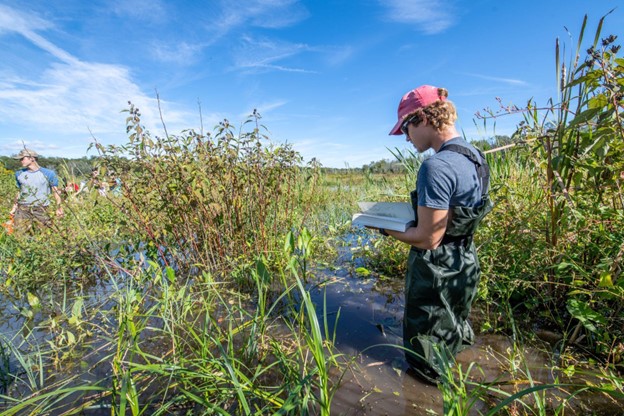
A man stands in knee high water taking measurements, surrounded by various grasses, on a sunny day with several clouds in the sky.

Andrew Zhang is a third year law student at Harvard Law School and a guest contributor to this blog. In the shadow of a government shutdown, the U.S. Department of Agriculture (USDA) finds its conservation programs facing an uncertain future. In some respects, there may be areas of stability or relief. For one, despite the 2018 Farm Bill’s expiration this…

Continue Reading

Addressing Wildfires in the Farm Bill

Rachael Lange is a second year student at Harvard Law School and a guest contributor to this blog. Bipartisan recognition of growing wildfire impacts across the country has led to the introduction of several wildfire-related bills that could become part of a future farm bill. The devastating wildfires in Southern California in early 2025, as well as the growing risk…

Continue Reading

Creating Consumer Choice in SNAP Benefits

Grace Huddleston is a law student in the HLS Food Law & Policy Clinic and a guest contributor to this blog. The SNAP proposal in H.R. 8467, Section 4129, the most recent House version of the 2024 Farm Bill, would implement research-oriented programs to commence over the next several years with the goal of gathering data to better understand the efficiency…

Continue Reading

Cultivated Meat’s Political Tightrope

Katie Kraska is a law student in the HLS Food Law & Policy Clinic and a guest contributor to this blog. Despite the potential that cultivated meat products hold for revolutionizing how food is produced, mention of this technology is nowhere to be found in House or Senate Farm Bill drafts or outlines. Given some recent state-level developments, that may be…

Continue Reading

Something Fishy in the Farm Bill?

Katie Kraska is a law student in the HLS Food Law & Policy Clinic and a guest contributor to this blog. Aquaculture is making waves in conversations about the future of farming. The industry now surpasses global production from wild caught fisheries, sparking domestic debate as lawmakers work to reauthorize the farm bill. Encompassing any propagation, breeding, rearing, and harvesting of…

Continue Reading

Bipartisan Proposal “AFFIRMS” a Fairer Approach to Federal Crop Insurance

Editor’s Note: This post is part of our series on marker bills and the 2018 Farm Bill. You can track the farm bill’s progress through Congress here and elsewhere on this blog. Farmers face a uniquely high amount of risk. An unexpected drought, an influx of pests, or a lower than expected crop yield can all have devastating effects on…

Continue Reading

Improving Soil Health Through Crop Insurance

One marker bill currently before the House Agriculture Committee, the Crop Insurance Modernization Act, proposes some of the same reforms to crop insurance as FBLE’s report on Productivity and Risk Management. One of its proposals involves strengthening incentives in crop insurance contracts for farmers to integrate better conservation practices into their regular operations. The bill, also known as H.R. 4865,…

Continue Reading

Local FARMS Act: An Opportunity for School Food

This is the fourth post in FBLE’s series on the Local FARMS Act. The Local FARMS Act, a 2018 Farm Bill marker bill introduced by Chellie Pingree (D-ME), Jeff Fortenberry (R-NE), and Sean Patrick Maloney (D-NY), includes a variety of programs that would support the growth of local food economies. One proposed provision intends to bolster the amount of local…

Continue Reading