Katie Kraska is a law student in the HLS Food Law & Policy Clinic and a guest contributor to this blog.
Aquaculture is making waves in conversations about the future of farming. The industry now surpasses global production from wild caught fisheries, sparking domestic debate as lawmakers work to reauthorize the farm bill.
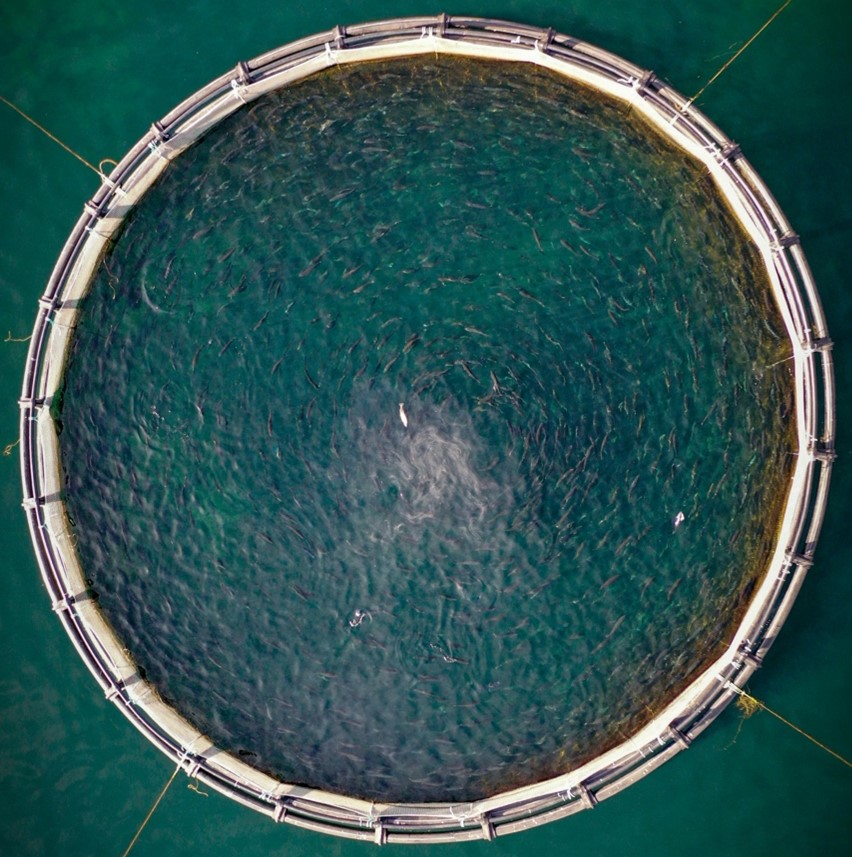
Encompassing any propagation, breeding, rearing, and harvesting of an aquatic plant or animal species, aquaculture practices are extremely diverse. They can involve large cages in the open ocean, coastal propagation of mollusks such as oysters, kelp forests off the coast, above ground tanks or ponds, or freshwater pens.
Congress passed the National Aquaculture Act (NAA) of 1980 (16 U.S.C. 2801 et seq.) to promote this industry in the U.S., directing a variety of federal agencies including the USDA to coordinate on regulation, research, and funding. The Subcommittee on Aquaculture is the interagency group, situated under the White House Office of Science and Technology Policy, tasked with regulating, administering programs, and providing support and research.[1] Recent administrations have reinforced the interest in this industry, and made efforts to smooth the regulatory path for development.[2]
For its part, USDA has already been taking an active role in aquaculture promotion, hosting a colloquium called “Aquaculture is Agriculture: USDA’s Role in Supporting the Farmers of Fish, Shellfish, and Aquatic Plants” in 2020. A variety of USDA programs already support the aquaculture industry, and if the U.S. House has anything to say about it, that role will expand.
Title VII of the House’s 2024 Farm Bill (H.R. 8467) directs USDA to establish an Aquaculture Advisory Committee to oversee programs and provide technical support for aquaculture practitioners. This includes consistent research and reporting on capital constraints and regulatory barriers for the industry’s development. Aquaculture assistance programs are also extended through 2029. Senate Democrats included similar provisions in their farm bill outline, such as reauthorizing the NAA, increasing funding for aquaculture programs, and creating an aquaculture liaison at USDA. While it is unclear what will find its way into the final bill, both chambers seem to be signaling some support for aquaculture development.
Meanwhile, lawmakers have flooded the field with a wide range of federal bills addressing aquaculture. The Sustaining Healthy Ecosystems, Livelihoods, and Local Seafood Act (H.R. 3951/S. 2211) introduced by Suzanne Bonamici (D-OR) and Sheldon Whitehouse (D-RI) would create an Office of Aquaculture and an Aquaculture Advisory Committee within the USDA, with plans to promote aquaculture while limiting its environmental impacts. Specific to plants, the Coastal Seaweed Farm Act (H.R. 1461), led by Jared Huffman (D-CA) and Mary Peltola (D-AK), would establish an Indigenous Seaweed Farming Fund and require USDA and other agencies to provide regulatory guidance and support for the industry. Jill Takuda (D-HI) and Mazie Hirono (D-HI) introduced the Promoting American Competition in Aquaculture Research Act (H.R. 3542/S. 2619) which would reauthorize USDA assistance programs and amend limitations on funding. Roger Wicker (R-MS) and Kat Cammack (R-FL) put forward a comprehensive regulatory framework for aquaculture in the Advancing the Quality and Understanding of American Aquaculture Act (H.R. 4013/S. 1861), which would set national standards and promote the industry. And the Supporting Equity for Aquaculture and Seafood Act (H.R. 5087), introduced by Frank Pallone (D-NJ), would require USDA to give aquaculture the same consideration in grants as animal agriculture, and report on how aquaculture can be incorporated into crop insurance.
However, not everyone is on board. Mary Peltola (D-AK) is spearheading the Domestic Seafood Production Act (H.R. 9226), which would, among other things, ban finfish aquaculture in the exclusive economic zone. Many public interest groups and local communities are concerned about the environmental impacts of finfish farming, given the food chain implications of predatory fish’s diets, spread of disease, and fish that escape from pens affecting wild fish populations. Washington state, Argentina, and Canada have already banned or have plans to transition away from salmon farming over similar concerns. Given the growing Congressional interest in aquatic farming to meet the growing demand for seafood and assist with trade imbalances in the U.S. seafood industry, the debate over regulation and promotion of the aquaculture industry is far from over.
The views and opinions expressed on the FBLE Blog are those of the authors and do not necessarily reflect the official policy or position of FBLE. While we review posts for accuracy, we cannot guarantee the reliability and completeness of any legal analysis presented; posts on this Blog do not constitute legal advice. If you discover an error, please reach out to contact@farmbilllaw.org.